What a Routing Plan Is, and Why It Comes First
A routing plan is the decision that every other decision on a golf course gets built on top of, and it has to come before anything else.
September 23, 2026 · 4 min read
Ask a green committee what a golf course architect actually does day to day and most people picture bunker shapes or green contours. Those matter, but they come later. The decision that shapes everything else on the property happens first, and it is called the routing plan.
What a routing plan actually decides
A routing plan is the sequence and layout of all eighteen holes across the property: where each tee sits, where each fairway runs, where each green falls, and how a golfer moves from the green of one hole to the tee of the next. It sets the corridors the rest of the design has to live inside. Once the routing is set, the grading plan, the drainage plan, the irrigation design, and the construction documents all get drawn to fit it. Change the routing after that point and every one of those plans has to be redrawn.
Reading the land instead of imposing on it
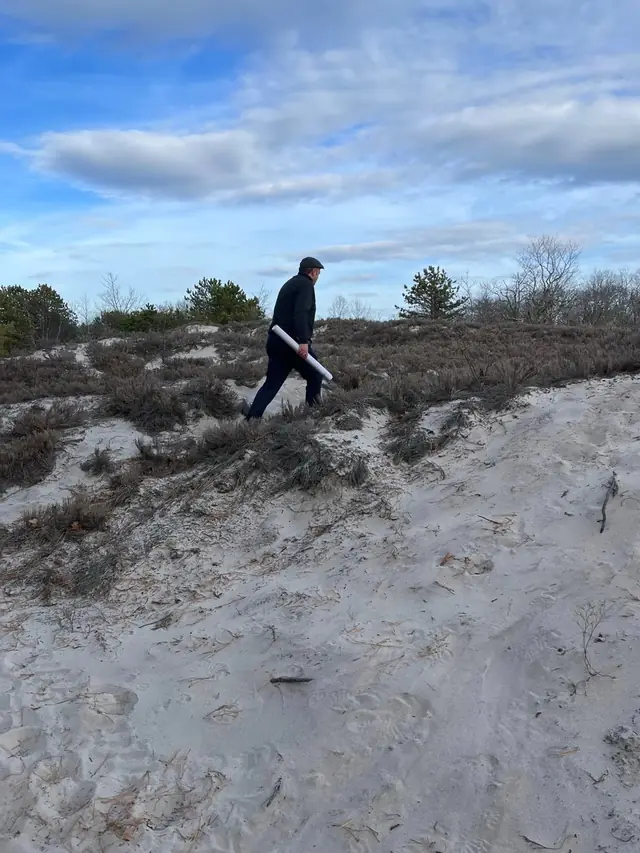
There are two ways to route a golf course. One starts with a generic idea of what a course should look like and forces the property to accommodate it, moving whatever dirt is needed to make the holes fit. The other starts by walking the property and asking what is already there: where the ridgelines run, where water naturally collects, where the tree cover thins out, where the soil changes. At Mellett Golf Course Design, the second approach is the whole method. The land is read closely during the routing phase specifically so the holes can be found on the site rather than dropped onto it. A hole that sits where the topography already wants it to sit needs less earth moved to build it, drains better once it is built, and tends to look like it has always belonged there.
What gets lost when this step is rushed
Skip a careful routing phase, or shortcut it with a desktop layout that was never walked on foot, and the problems surface later, usually during construction when they are far more expensive to fix. Holes end up fighting the natural drainage instead of using it. Greens get pushed into low points that stay wet. Corridors turn out too tight once the trees are cleared and the real sightlines appear. None of these are design flaws you can see on paper. They only show up once equipment is on site, which is exactly when they cost the most to correct.
Walking the property before drawing a line
A routing plan done properly takes time on the ground, not just time at a desk. The property gets walked repeatedly, in different light and after rain, to understand how water actually moves across it and which high points give a hole real character. This is slower than sketching a routing from an aerial photo, but it is the difference between a course that sits naturally on its land and one that was laid over the top of it. Mellett Golf Course Design, based in Salisbury, North Carolina, works this way on every project, whether the property is a mountain tract, a coastal site, or open acreage a home builder is laying out for a residential course.
Routing at very different kinds of sites
The same method has to work whether the site is a mountain tract, a coastal parcel, or a piece of open ground a home builder is laying out for a new community. John Mellett worked with Jack Nicklaus on Montreux Golf Club, a mountain property outside Reno, Nevada, built to host a PGA Tour event, where the routing had to solve for steep grade change rather than flat farmland. That range of terrain is part of why the walk-the-land approach matters so much: a routing method that only works on gentle ground is not really a method, it is a shortcut that happens to succeed on easy sites.
Routing and the sustainable case
A routing that reads the land also tends to be the more sustainable one, though sustainability is really a side effect of the same discipline rather than a separate goal. Holes that follow the natural contour need less imported fill, disturb less of the existing tree cover, and keep more of the site's own drainage pattern intact once construction is finished. That has real, practical consequences for long-term maintenance too: a course built with the grain of its land tends to hold up better against erosion and drains more predictably after storms, simply because the design never fought the water in the first place.
Where the routing plan leads
Once a routing is set and walked, it becomes the reference document for every plan that follows: the master plan for a renovation, the grading and stormwater plan, the construction documents a contractor builds from. Getting it right at the start is the cheapest point in the whole project to get it right. If your board or ownership group is looking at new ground or weighing a renovation and wants to talk through what a routing plan would look like for your property, John Mellett can be reached directly at 704.877.5600 or john@mellettgolfdesign.com.
Mellett Golf Course Design, 704.877.5600
Call 704.877.5600More articles
Reading a Renovation Master Plan: Current vs. Proposed
A renovation master plan is really two drawings in one: what a hole is doing wrong today, and exactly what changes to fix it.
Why the Architect Should Be on Site During Construction
The best golf course plans are still only the first phase; the real detail gets decided with equipment already on the ground.