Grading and Stormwater on a Golf Course, Explained Plainly
How a golf course is graded determines how it drains for the life of the property, long after construction is finished.
September 23, 2026 · 4 min read
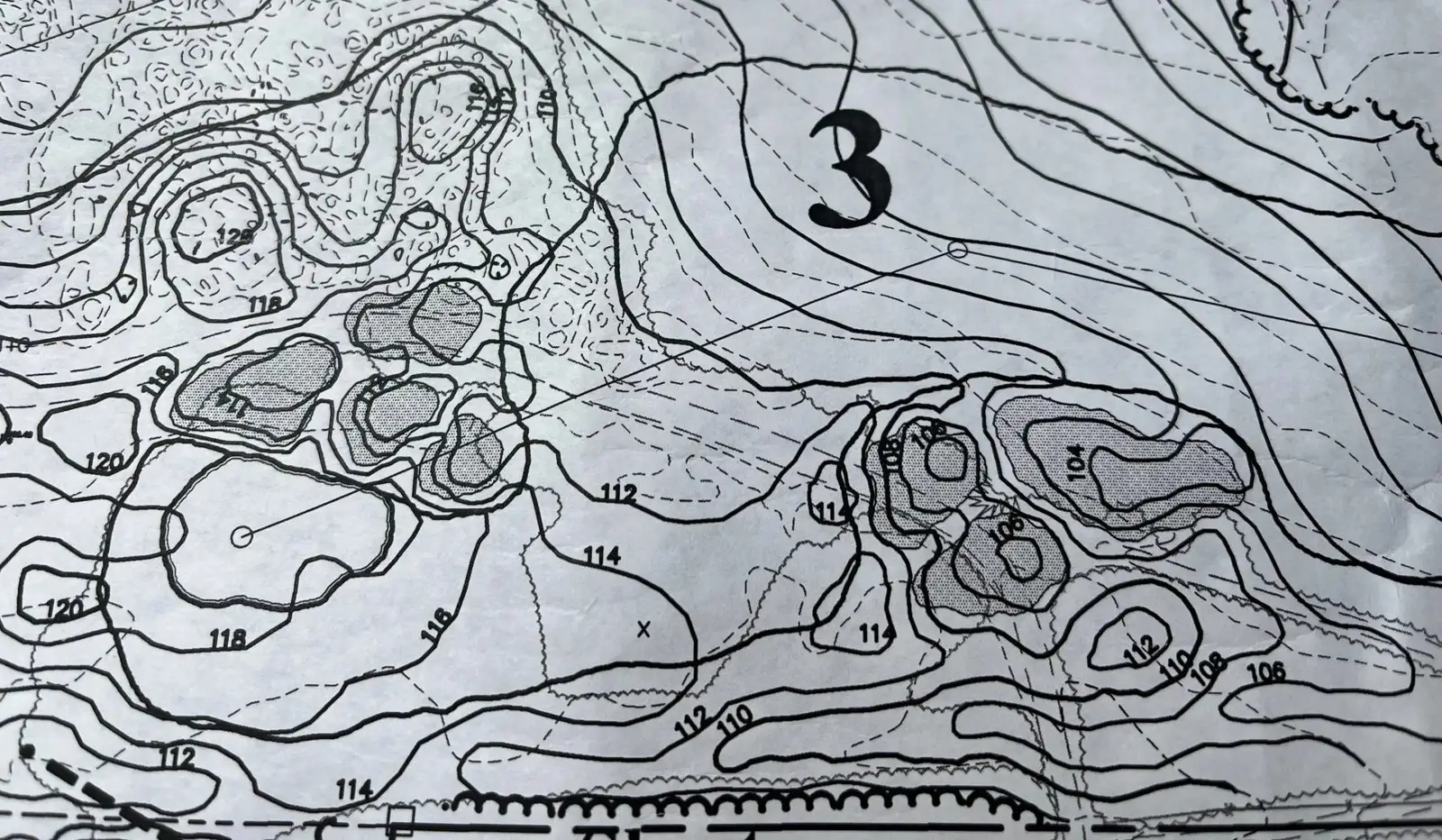
Grading is one of the least visible parts of a golf course design and one of the most consequential. A hole can have a great routing and a bold bunker scheme and still play poorly for years if the grading underneath it was not thought through, because grading is what decides where water goes every time it rains.
Why minimal grading is the goal, not a limitation
There is a version of golf course construction that treats grading as a blank slate: clear the site, move whatever dirt is needed, and sculpt the desired shapes from scratch. Mellett Golf Course Design works the other way. Because the routing is found on the land during the earlier planning phase rather than imposed onto it, the amount of grading needed to build the hole is naturally reduced. Holes that already sit close to the property's real contours need less earth moved to finish them, which keeps more of the natural vegetation intact and keeps construction closer to the site's own drainage patterns instead of fighting them.
Reading a contour plan
A grading plan is drawn with contour lines and spot elevations across each hole, showing exactly how the ground will slope once construction is finished. On a plan like this, closely spaced contour lines mean a steeper slope, and evenly spaced lines mean a gentler one. Bunkers, greens, and fairway shaping are all shown against this contour base, so a contractor building the hole can see not just where a bunker sits but how the ground around it is meant to fall. Reading one of these plans is a good way for a green committee to understand what a hole will actually look and play like before any construction starts.
What SCMs and BMPs mean in plain terms
Grading and stormwater plans on a golf course typically reference SCMs and BMPs. An SCM, a stormwater control measure, is a built feature, a pond, a swale, a detention area, designed specifically to hold or slow water as it moves across the property, rather than letting it run off unmanaged. A BMP, a best management practice, is a broader design or maintenance approach aimed at protecting water quality as it drains off the course, things like how close mowed turf comes to a water feature or how a slope is stabilized against erosion. Both get planned alongside the grading itself, not bolted on afterward, because where the water is meant to go has to be decided at the same time as how the ground is shaped.
Seeding, sodding, and what gets planted where
Grading and planting plans go together for a practical reason: freshly graded ground needs to be stabilized and established, and the choice between seeding and sodding, and which native vegetation gets kept or reintroduced, affects both how quickly an area establishes and how it drains once it is growing. A well built grading and stormwater plan accounts for this from the start rather than treating it as a final landscaping step.
Grading near water and other sensitive ground
Grading decisions carry the most weight on sites where water is already a defining feature of the property, coastal ground, a course built around an existing creek or wetland, or terrain with meaningful natural drainage of its own. On those sites the grading and stormwater plan has to work with what the land is already doing rather than override it, which circles back to the same land-first principle that shapes the routing in the first place. Grading, irrigation design, arborist and tree services, and hydrogeological work are often handled by different specialists on a project, but they all draw from the same routing and grading base, which is why keeping one design lead coordinating that reference material matters as much on the water and drainage side of a project as it does on the golf side.
Why this is not a step to shortcut
It is tempting to treat grading and stormwater work as a technical formality that happens after the interesting design decisions are already made. In practice, a grading plan that is rushed or treated as an afterthought is one of the most common sources of long-term maintenance headaches on a golf course, standing water in low spots, erosion along slopes that were never properly stabilized, drainage that fights the natural contour instead of using it. Getting this plan right at the same stage as the routing and master plan, rather than after, is what keeps those problems from showing up years into the course's life.
Planning grading into your project early
Grading and stormwater work is easiest to get right when it is planned alongside the routing and master plan, not added after the fact. Mellett Golf Course Design, based in Salisbury, North Carolina, handles grading and stormwater management plans, SCMs, BMPs, and seeding and planting plans as part of its core design work. To talk through what this looks like for your property, contact John Mellett at 704.877.5600 or john@mellettgolfdesign.com.
Mellett Golf Course Design, 704.877.5600
Call 704.877.5600More articles
What a Routing Plan Is, and Why It Comes First
A routing plan is the decision that every other decision on a golf course gets built on top of, and it has to come before anything else.
Reading a Renovation Master Plan: Current vs. Proposed
A renovation master plan is really two drawings in one: what a hole is doing wrong today, and exactly what changes to fix it.